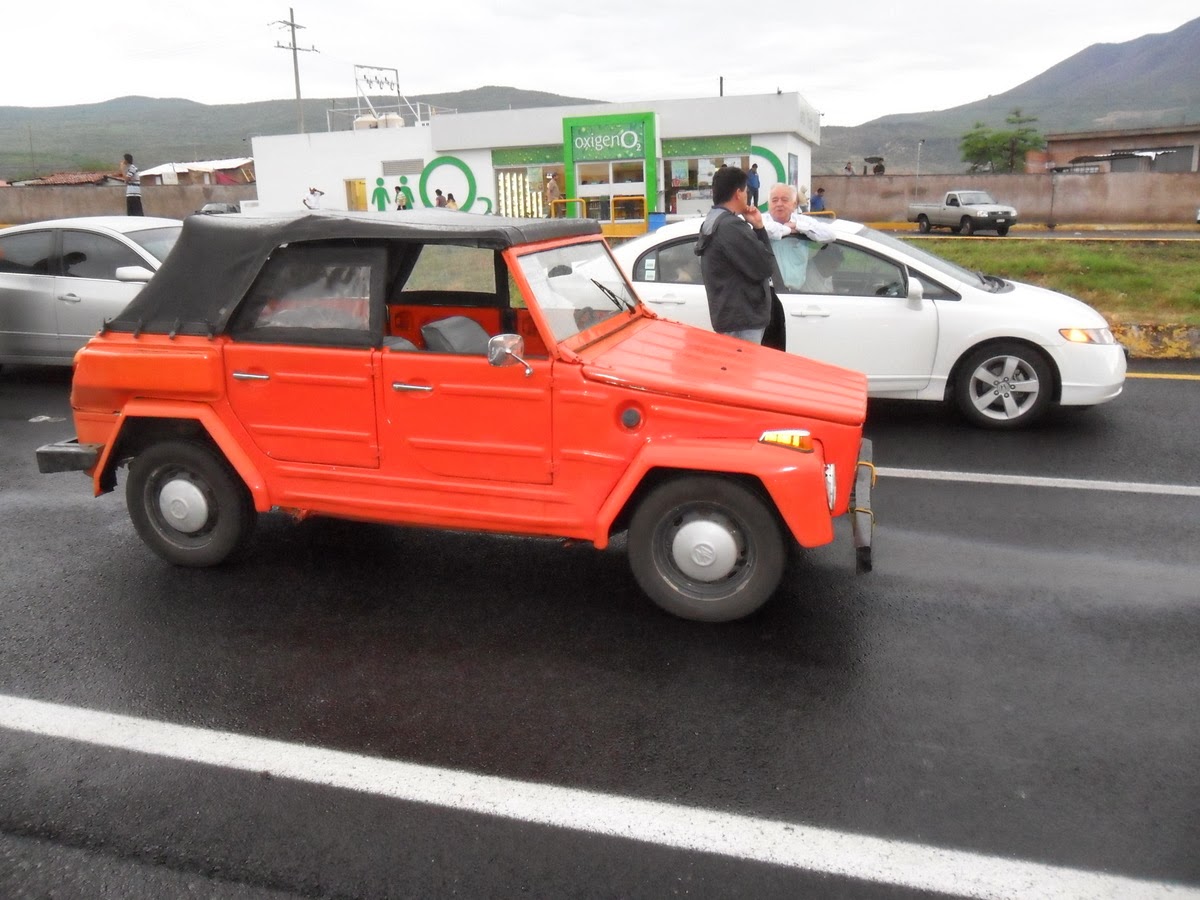
In coming to Celaya, our friends Yite and Xochitl had told us this would help renew both our body and soul. Once more, the unexpected turn of events (this time with the right rear brake) meant we would be in Celaya for at least another day. Our first stop that morning was to a Brake and Clutch shop located nearby. There, the brake master and Plinio examined the rear brake. As Sr. Calabaza is a VW 181 with differential blocks, replacing the brake system is no easy task as the brake cylinder is not readily available, and neither are the seals. However, the brake master took on the task and said we would call later that day once Sr. Calabaza was ready.
Pensando en pasar a Celaya, nuestros amigos Yite y Xochitl nos dijeron que esto nos ayudaría renovar tanto nuestros cuerpos como el alma. Nuevamente, el giro de eventos inesperados (ahora con los frenos) nos indicaba que tendríamos que estar en Celaya por lo menos un día más. Nuestra primera parada este día fue a un cercano taller de clutch y frenos. Allí, el maestro de los frenos y Plinio examinaron el freno trasero afectado. Dado que el Sr. Calabaza es un VW 181 con diferenciales, reemplazar el sistema de frenos no será algo fácil dado que no se encuentra fácilmente el cilindro de los frenos, ni sus gomas. Sin embargo, el maestro de los frenos aceptó el encargo y dijo que nos llamaría en cuanto estuviera listo el Sr. Calabaza.
![]()
Along with Xochitl, Yite, and their youngest son, Dariel, we crossed the street and grabbed a number at one of the best hearty taco stands in Celaya. This was the first time I had ever had to take a number at a taco stand, yet the long line alone was evidence of the stand’s fame. The fresh tortillas were handmade right in front of us and the fillings ranged from chile rellenos and venas (fried veins of different chiles – HOT!) to tripe, chicharrón (pork skins), and steak, among others. Following our breakfast, we were pleased to see Sr. Calabaza had already been taken into the shop and the brake master was already examining the side in question. We returned home, anxious for what the rest of the day would bring.
![]()
Junto con Xochitl, Yite, y su hijo menor, Dariel, cruzamos la calle en frente del taller y sacamos un número en uno de los puestos de tacos más ricos de la ciudad. Esta fue la primera vez que yo tuviera la necesidad de sacar un número en un puesto de tacos, pero la cola de gente allí esperando atestaba a la fama del puesto. Las tortillas frescas fueron hechas a mano allí en frente de nosotros y los guisos incluían desde chile rellenos y venas (así es, las venas de los chiles), hasta tripa, chicharrón, y bistec en salsa, entre otros. Después del desayuno, nos dio gusto que el Sr. Calabaza ya estaba dentro del taller y el maestro de los frenos ya lo estaba examinando. Regresamos a la casa, con ganas de ver que nos traería el día.
![]()
The State of Guanajuato is generally known as the “cradle of Independence” as it was here, in the city of Dolores Hidalgo where Father Miguel Hidalgo issued the first cry for Independence from Spain on the evening of September 15, 1810. From there, on September 16 (Mexico’s Independence Day) the growing group of Insurgents made their way to the Sanctuary of Atotonilco where they took a banner of the Virgen of Guadalupe as their emblem as they rode on to what is now San Miguel de Allende. Ignacio Allende himself, born in the town that now bears his name, was a prominent figure of the Independence movement. Other cities across Guanajuato, and the neighboring State of Queretaro (and others), were central to the launch of struggles for Mexico’s Independence, which last year celebrated its much anticipated bicentennial. The city of Guanajuato (which has to be one of the most beautiful cities in Mexico), has various monuments and structures honoring the Independence movement, including the towering structure of Pípila atop a hill overlooking the city. Celaya, for example, possesses the first Independence column built with the emblem of an eagle clutching a snake in its beak, which is part of the Mexican flag. Our destination for the day was to the quaint, historic, picturesque Pueblo Mágico (and UNESCO World Heritage Site) of San Miguel de Allende.
Se conoce el Estado de Guanajuato generalmente como “la cuna de la Independencia” dado que fue aquí, en la ciudad de Dolores Hidalgo donde el Padre Miguel Hidalgo emitió el grito para la Independencia Mexicana de España el 15 de septiembre del 1810. De allí, el 16 de septiembre (el Día de Independencia en México) un grupo creciente de Insurgentes fueron al Santuario de Atotonilco, donde tomaron el estandarte de la Virgen de Guadalupe como su bandera mientras seguían hacía lo que es ahora San Miguel de Allende. Ignacio Allende por si, nacido en el pueblo que ahora lleva su nombre, fue una figura importante en el movimiento para la Independencia. Otras ciudades tanto en el Estado de Guanajuato, como en Querétaro (y otros), fueron centrales cuando empezaron las luchas para la Independencia Mexicana, cuyo bicentenario fue celebrado en todo el país el año pasado. La Ciudad de Guanajuato (que puede ser una de las ciudades más bellas en todo México), contiene varios monumentos y estructuras que conmemoran la lucha para la Independencia, incluyendo la gran estructura del Pípila ubicada en una colina con una vista de toda la ciudad. Celaya, por ejemplo, posea la primera columna de la independencia construida con la figura de un águila con una víbora en su boca, la cual se convirtió en parte de la bandera nacional posterior a su Independencia. Nuestro destino para este día era el pueblo pintoresco, histórico, y mágico de San Miguel de Allende (también nombrado patrimonio de la humanidad por UNESCO en 2008).
![]() |
| La Parroquia de San Miguel Arcangel - San Miguel de Allende, Guanajuato |
Perhaps one of the most distinguishing buildings in San Miguel de Allende (SMA), which is home to numerous artists and has a large foreign (i.e. American and Canadian) community, is the Parroquia of San Miguel Archangel. I recall the first time I visited San Miguel years ago, we came across a wedding at sunset that was just departing the church as the bride and groom hopped into a carriage. It was like a fairy tale. I have also been in San Miguel on Independence Day, where I enjoyed the parades, reenactments of the Insurgentes Independence ride from Dolores Hidalgo, and even a bullfight. Yet, our first stop was not to the popular central area of San Miguel but rather to a little known secret just North of the city – thermal baths.
En esta ciudad que también es el hogar de muchas artistas y extranjeros (Estadounidenses y Canadienses), quizás uno de los edificios más distinguidos de San Miguel de Allende es la Parroquia de San Miguel Arcángel. Me acuerdo todavía mi primera visita a San Miguel hace varios años, pasamos por la iglesia poquito antes del atardecer e iban saliendo unos novios de su boda y se subieron a un carruaje. Fue como un cuento de hadas! También he estado en San Miguel para el Día de la Independencia, y disfruté de los desfiles, las representaciones de los Insurgentes (con Hidalgo y Allende) llegando al pueblo desde Dolores Hidalgo, y hasta una corrida de toros.
Pero, nuestra primera parada no fue en el centro famoso de San Miguel, sino a un lugar medio secreto al Norte de la ciudad – los baños termales.
We stopped at La Gruta Restaurant & Spa about 15 minutes North of SMA, quickly changed and made our way to the mildly warm waters of the large pools one first encounters along the path. Following our hosts, we made our way slowly in the crystal clear water through a small tunnel that eventually opened up into a wide circle, covered with what appeared to be an earthen dome. It reminded me of a sweat lodge or temazcal. We were submerged in water up to our torsos as four or five shafts of light shone down.
On one wall there was a strong flow of water bursting through a pipe into the pool below; a few people were lined up to take turns standing under the hot waterfall in order to massage away aches and pains. This was exactly what we needed!
![]()
Nos estacionamos fuera de La Gruta Restaurante & Spa a unos 15 minutos al norte de San Miguel de Allende, nos cambiamos y caminamos hacía las aguas tibias de la primera alberca que se encuentra en el camino. Siguiendo nuestros anfitriones, caminamos lentamente por el agua cristalina por un pequeño túnel que abrió a un círculo, cubierto con lo que parecía un domo hecho de tierra, como si fuera un temazcal. Nos llegaba el agua hasta el torso, y había cuatro o cinco entradas de luz que brillaban desde arriba. A un lado, había una apertura con agua caliente entrando desde arriba, como si fuera una cascada, hacía la alberca; había unas cuantas personas formadas, esperando para ponerse debajo de la cascada para sentir el rico masaje de agua que les quitaría cualquier dolor o queja. Esto era exactamente lo que necesitábamos!
We lingered in the hot cave for a while before making our way back to the larger pools, where the water was bit cooler and we could enjoy the rays of the sun. Refreshed and relaxed, we changed once again and began our trip back to SMA.
![]() |
| Santuario de Atotonilco |
However, before making our way to the cobblestone streets of SMA we stopped in the small town of Atotonilco (a shared UNESCO World Heritage site with San Miguel). We walked into the beautiful Sanctuary and marveled at the recently restored frescos adorning the walls, ceilings, and doors of the church. There, we also saw a replica of the banner of the Virgen of Guadalupe used by Father Hidalgo in persuading more people to join he and the Insurgents during the call for Independence over 200 years ago.
![]()
Nos quedamos en la gruta vaporosa por un tiempo antes de salirnos a las otras albercas, donde el agua no era tan caliente y pudimos deleitarnos en los rayos del sol. Ya refrescados y relajados, nos vestimos y empezamos el viaje de regreso hacía San Miguel. Pero, antes de llegar a las calles empedradas de San Miguel, nos detuvimos en el pueblito de Atotonilco (que comparte con San Miguel el nombramiento como patrimonio de la humanidad). Entramos al Santuario y admiramos los frescos restaurados que adornan las paredes, techos, y puertas de la iglesia.
Allí, también vimos una réplica del estandarte de La Virgen de Guadalupe utilizado por el Padre Hidalgo en persuadir a la gente que lo siguiera tanto a él como a los Insurgentes al empezar las luchas para la Independencia Mexicana hace más de 200 años.
![]() |
| Plinio, Sami, Yite y Xochitl |
Leaving Atotonilco, we made a short stop at a well-known roadside stand “Gorditas El Puestecito” for a light, early dinner. The brake master had called and told us Sr. Calabaza was ready, though we needed to be back before 6 p.m., which ruled out a longer meal at one of SMA’s many restaurants. In San Miguel de Allende we walked through the zócalo and stopped to admire the always breathtaking rose colored steeples of the Parroquia of San Miguel Archangel.
Before leaving, we stopped into the bar La Cantonela with its multitude of black & white portraits of actors and singers from the “Golden Epoch” of Mexican film.
Saliendo de Atotonilco, nos paramos rápidamente a comer en un puesto al lado de la carretera conocido como “Gorditas El Puestecito.” El baño nos dio mucha hambre. El maestro de los frenos nos había llamado para decir que el Sr. Calabaza ya estaba listo y teníamos que regresar antes de las 6 p.m., por lo cual no pudimos pasar a uno de las ricas restaurantes que tiene San Miguel.
![]() |
| Ignacio Allende |
Llegando a San Miguel, caminamos por el zócalo y nos quedamos un buen rato admirando los muros de color rosa de la famosa Parroquia de San Miguel Arcángel. Antes de partir, nos paramos en el Bar La Cantonela, con su multitud de retratos en blanco y negro de varios artistas de la Época de Oro del cine mexicano.
Though San Miguel was tempting us to stay longer, the desire to see Sr. Calabaza and plan the next day’s trip was even stronger, so we headed back to Celaya through an impressive rainstorm. Pulling up to the Clutch and Brake Shop, we were pleased to see Sr. Calabaza waiting outside. The brake master explained what he had done to the rear right side, and indicated he had also adjusted one of the front brakes that was too tight. Plinio hopped into Sr. Calabaza to do a test run there in front of the shop; he drove down one side of the road, stopped, made a u-turn and began to drive back. On the drive back to where we were, the brakes went out again – and once more fluid began leaking on the same side!
![]()
Aunque San Miguel de Allende nos tentaba en quedarnos más tiempo, el deseo de volver a ver al Sr. Calabaza y planear el viaje del otro día era más fuerte, entonces empezamos el camino de regreso a Celaya, pasando por un aguacero impresionante. Llegando al taller de clutch y frenos, nos dio gusto ver el Sr. Calabaza esperándonos afuera. El maestro de los frenos nos explicó todo lo que había hecho al lado apropiado, y nos indicó que también había calibrado un freno de enfrente que estaba apretado. Plinio subió al Sr. Calabaza para dar una vuelta de prueba en frente del taller; pasó por un lado de la calle, se detuvo, dio vuelta en U, y venía de regreso cuando de repente volvieron a fallar los frenos – y nuevamente el líquido de los frenos salía del mismo lado!
The night was coming quickly, and the Mexican under-17 champion soccer team was about to play Germany in the semi-finals for the World Cup, and the effects from the massaging waters from La Gruta were beginning to wear off. The next day’s plan would now consist of cancelling the brakes on that side once more and consider other options either in León, Queretaro, or perhaps even Guadalajara. Luckily, after much searching online we came across a VW Safari shop in Guadalajara and knew what our next step would be. That evening, the under-17 Mexican team beat Germany 3-2 in a made for movie type spectacular finish!
La noche ya venía acercando, el equipo Mexicano sub-17 estaba por enfrentar a Alemania en los semifinales de la Copa Mundial, y los efectos del masaje de las aguas termales de La Gruta ya empezaban a perder su esfuerzo. El plan para el próximo día ahora iba a consistir en cancelar los frenos del mismo lado nuevamente y considerar otras opciones, o sea en León, Queretaro o aún en Guadalajara. Por suerte, después de realizar varias búsquedas por internet, encontramos un taller especializado en los Safari de la VW en Guadalajara y ya sabíamos el próximo paso. Esta noche, el equipo Mexicano sub-17 le ganó 3-2 a Alemania en un segundo tiempo que fue de película!


 En el centro de Celaya, hay tres características prominentes, todos ubicados cerca uno al otro: la Catedral de San Francisco, la columna de Independencia que se erigió al segundo aniversario de la Independencia Mexicana de España, y la gran “Bola de Agua,” un tanque de agua construido por Eiffel (si, EL Eiffel) en 1910 y que sigue en operación.
 Entre los artículos conocidos en Celaya son los ricos dulces de caramelo así como la cajeta, hechos con leche de cabra. En nuestro último día en Celaya, nuestros anfitriones Yite, Xochitl y sus hijos Yael y Dariel, nos llevaron al centro a desayunar antes de regresarnos a la casa para empacar nuestras cosas en Sr. Calabaza y continuar con nuestro viaje cuidadosamente (sin uno de los frenos) a Guadalajara en busca del “Sensei” de los VW Safaris.